Home Method Gallery Courses Contact Anzan Deutsch
Soroban Talente · Abacus School

Maths
you can
see.

The Japanese abacus makes abstract numbers tangible – as an image that anchors itself in the mind. Many who start with it eventually calculate entirely without any aid.

Request a trial lesson
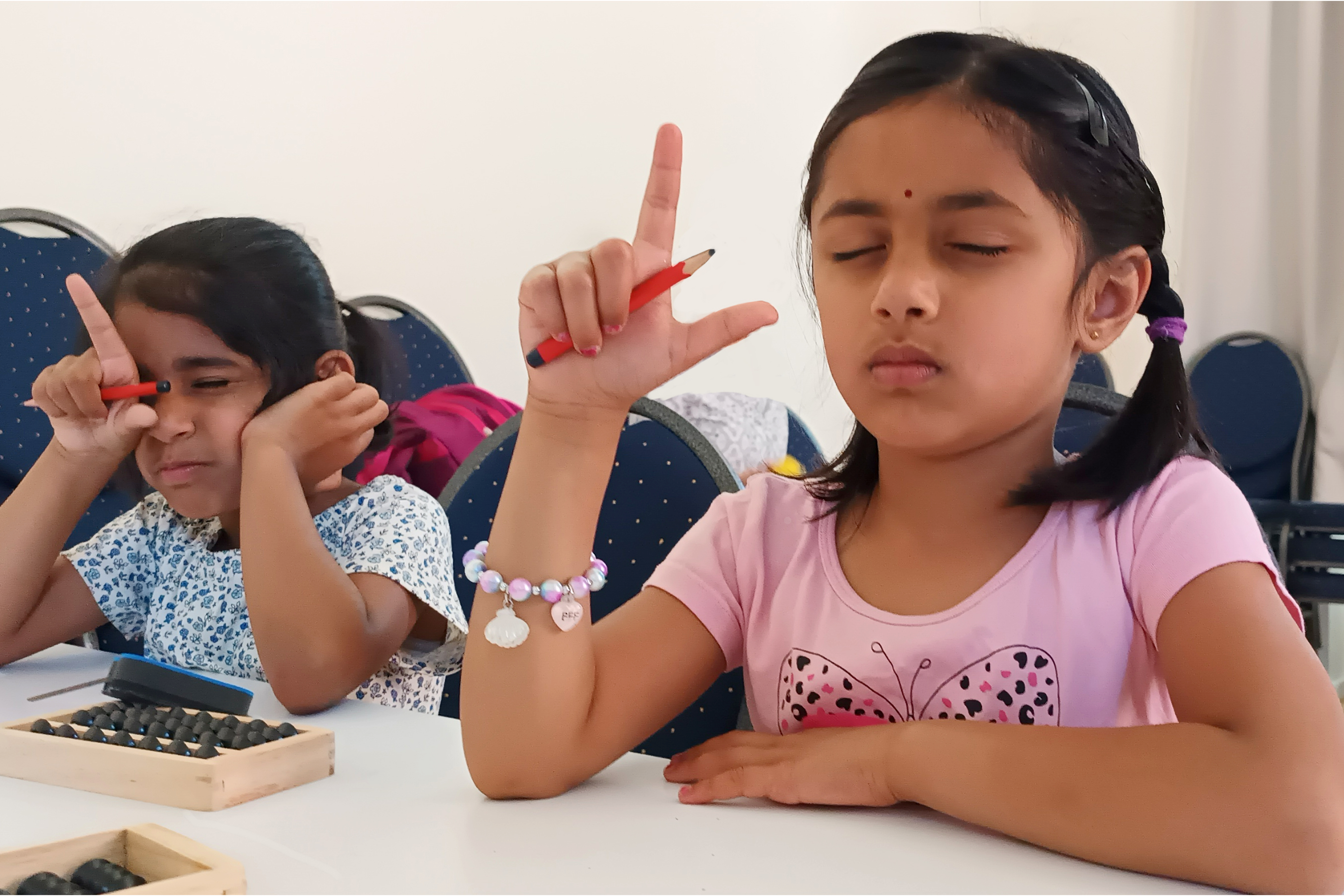
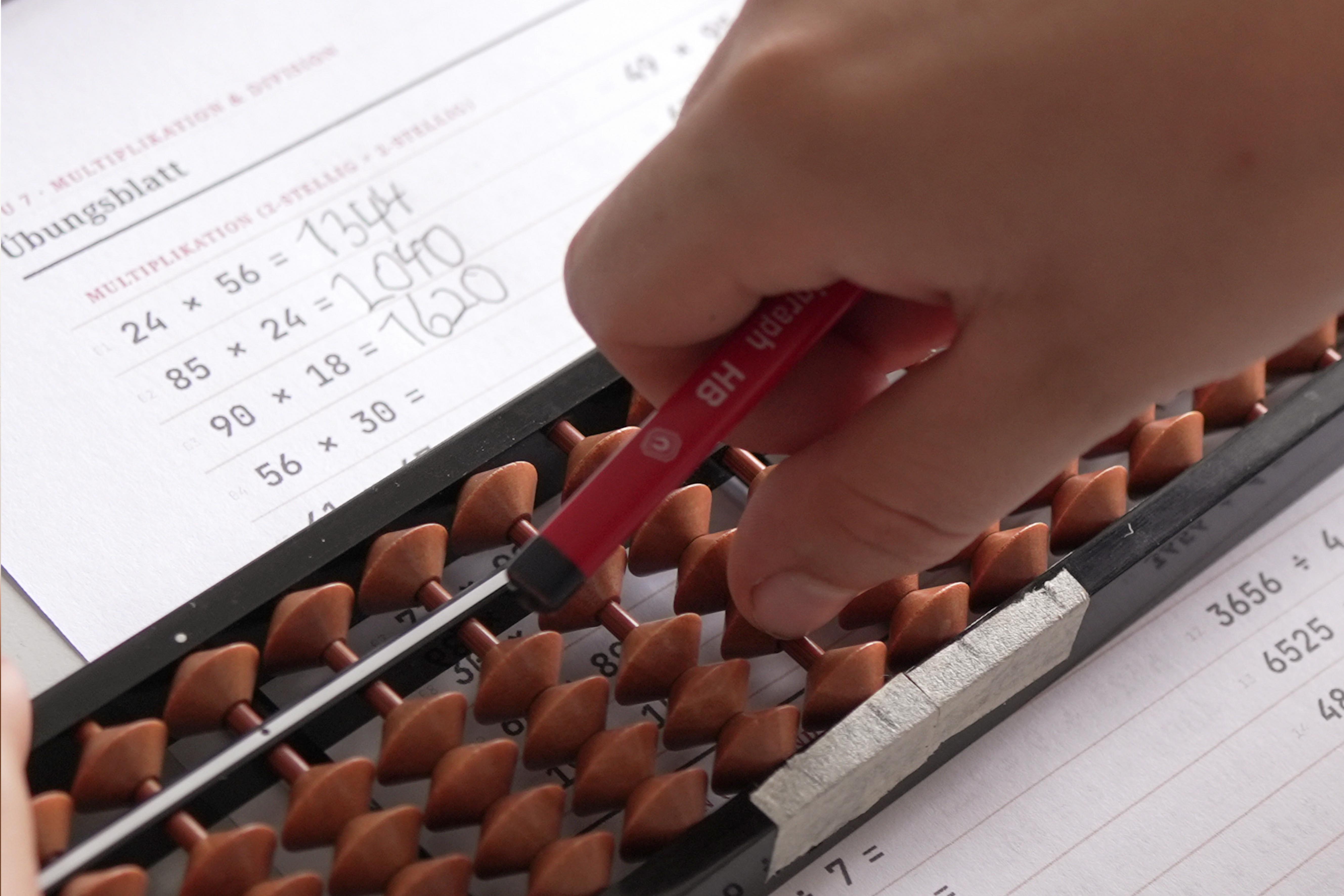
Japanese Soroban abacus for children learning mental calculation
10M+ learners worldwide
use the Soroban
2,500+ years of development
of the abacus
Up to 10x faster calculation
New Course

Mental Arithmetic
for Advanced Learners

In secondary school, it is no longer quick calculation that counts, but the ability to hold numbers securely in mind and work with them flexibly. This is exactly where the Soroban comes in: those who calculate with the abacus build a precise inner mental image and thereby specifically train working memory and concentration — foundations that are increasingly important in mathematics as well as in the sciences. Older children benefit twofold: they gain confidence within the number range and a mental calculation technique that serves them well in everyday school life.

Tuesday 5:00 – 5:50 pm
Weekly during term time, in small groups
Location Kinder- und Elternzentrum Kolibri e.V. Ritzenbergstraße 3, 3rd floor
01067 Dresden
Age 9 – 14 years
Fee €69 / month Free trial lesson available
Book a trial lesson
Child learning mental arithmetic with the Soroban abacus

A tool that uses the brain differently

The Soroban engages both hemispheres of the brain at once: the left for logical, structured calculation, the right for the spatial visualisation of the beads. Studies from Japan and China show that regular Soroban training measurably improves processing speed and working memory.

The abacus is not a replacement for a calculator – it is a thinking tool that builds a mental model for numbers, one that works even without the device.

Visual & spatial

The beads represent numerical values directly as a position in space. This makes it easier to understand place values, magnitudes and arithmetic operations.

Mentally anchored

Over time, an inner image of the abacus takes shape. Experienced learners solve complex problems in their heads – the physical abacus becomes unnecessary.

Proven effective

In Japan, the Soroban is part of the school curriculum. Cognitive science research confirms positive effects on concentration and number sense.

1

Brain training with lasting effect

The Soroban activates both hemispheres of the brain: children specifically improve their concentration, attention and memory. Regular practice builds stamina and helps them solve even complex problems calmly and with focus.

2

Creativity meets number sense

Visualising the calculation steps in the mind fosters imagination and strengthens children's creative side. They learn to think flexibly and to view problems from different angles – a key to innovative thinking.

3

Confidence through success

When children realise they can solve difficult calculations entirely on their own, they grow beyond themselves. This strengthens not only their self-confidence but also has a positive effect on many other areas of life.

4

Better grades – not just in maths

Studies show that children who master mental arithmetic also perform better in other school subjects, because they grasp connections more quickly and remember information more easily.

5

Logical thinking becomes a superpower

Mental calculation is like a workout for the mind: it fosters logical thinking, problem-solving and structured working – skills that are indispensable in today's and tomorrow's digital world.

6

Learning that's fun

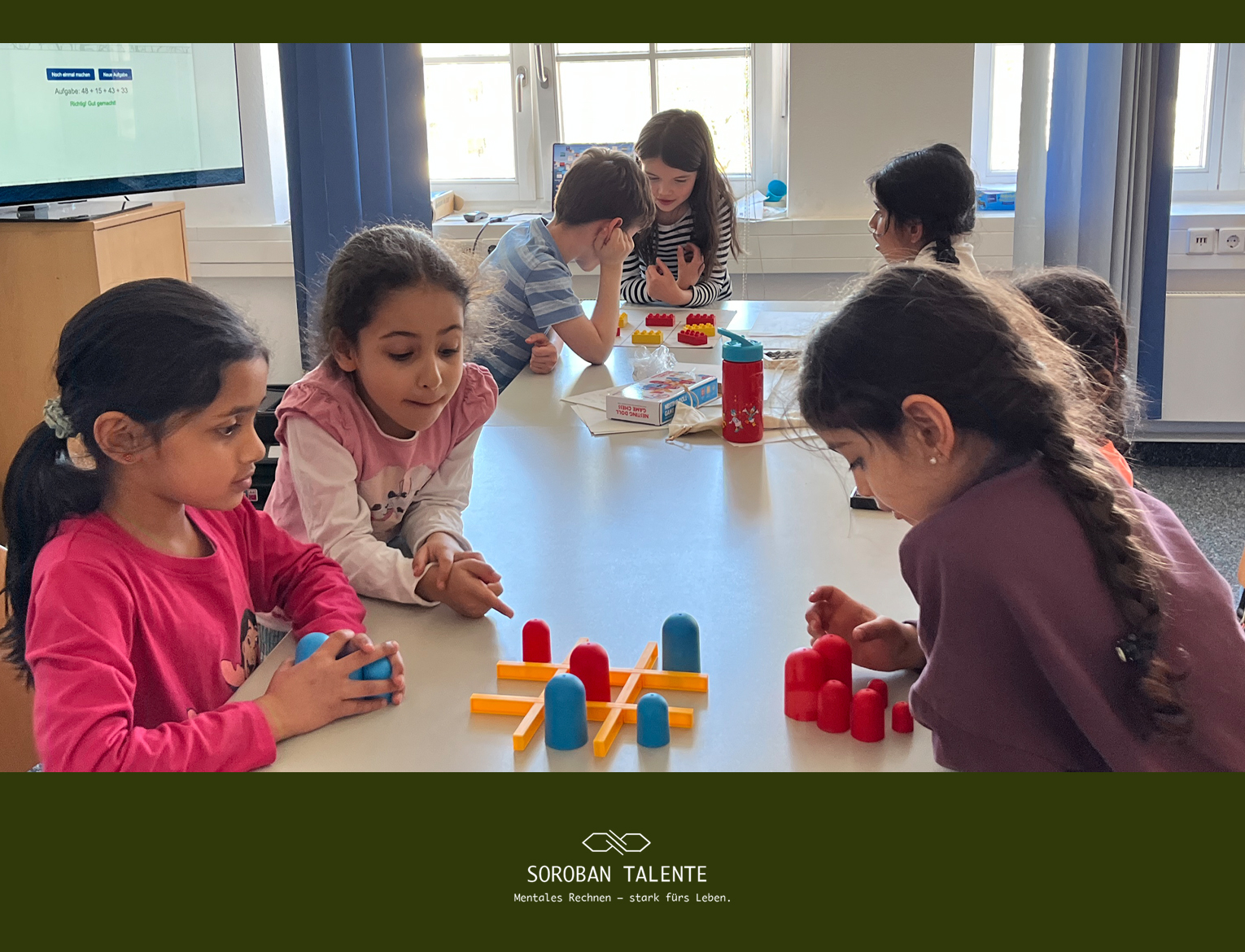
The Soroban isn't about dry mathematics. Playful elements, practising together and tangible moments of success turn learning into a real adventure. This creates genuine joy in learning – and the motivation to keep going.

7

Cultural knowledge included

The Soroban has a long tradition, especially in Asia. Learning with the abacus lets children immerse themselves in a new culture and broaden their horizons playfully – entirely without pressure.

History of the Soroban abacus

The Soroban is the Japanese variant of the abacus and has a long and fascinating history that is significant both culturally and pedagogically. The abacus was originally developed in ancient China and has been in use for over 2,500 years. In the 14th century it made its way to Japan. The Japanese adapted the design to their own needs, which led to the development of the Soroban. In the 17th century, the Japanese mathematician Mitsuyoshi Yoshida simplified the design to a 5:1 bead ratio to optimise use of the decimal system. In the 20th century, the Soroban was further reduced to a 4:1 bead ratio, which increased efficiency. Competitions and certifications in Soroban skills remain common to this day.

More than mathematics

Calculating with the abacus demands focus, patience and precise hand movements – skills that carry over into other areas.

Concentration

Every calculation requires full attention. Distracted movements immediately lead to wrong results – this trains conscious focus.

Memory

Intermediate results are not written down but held in mind. This trains working memory in a direct way.

Motor skills & rhythm

Two-handed operation and a steady calculating rhythm foster coordination and a structured working pace.

Number sense

Instead of memorising rules, an intuitive feel develops for magnitudes, estimates and the place-value system.

From the classroom

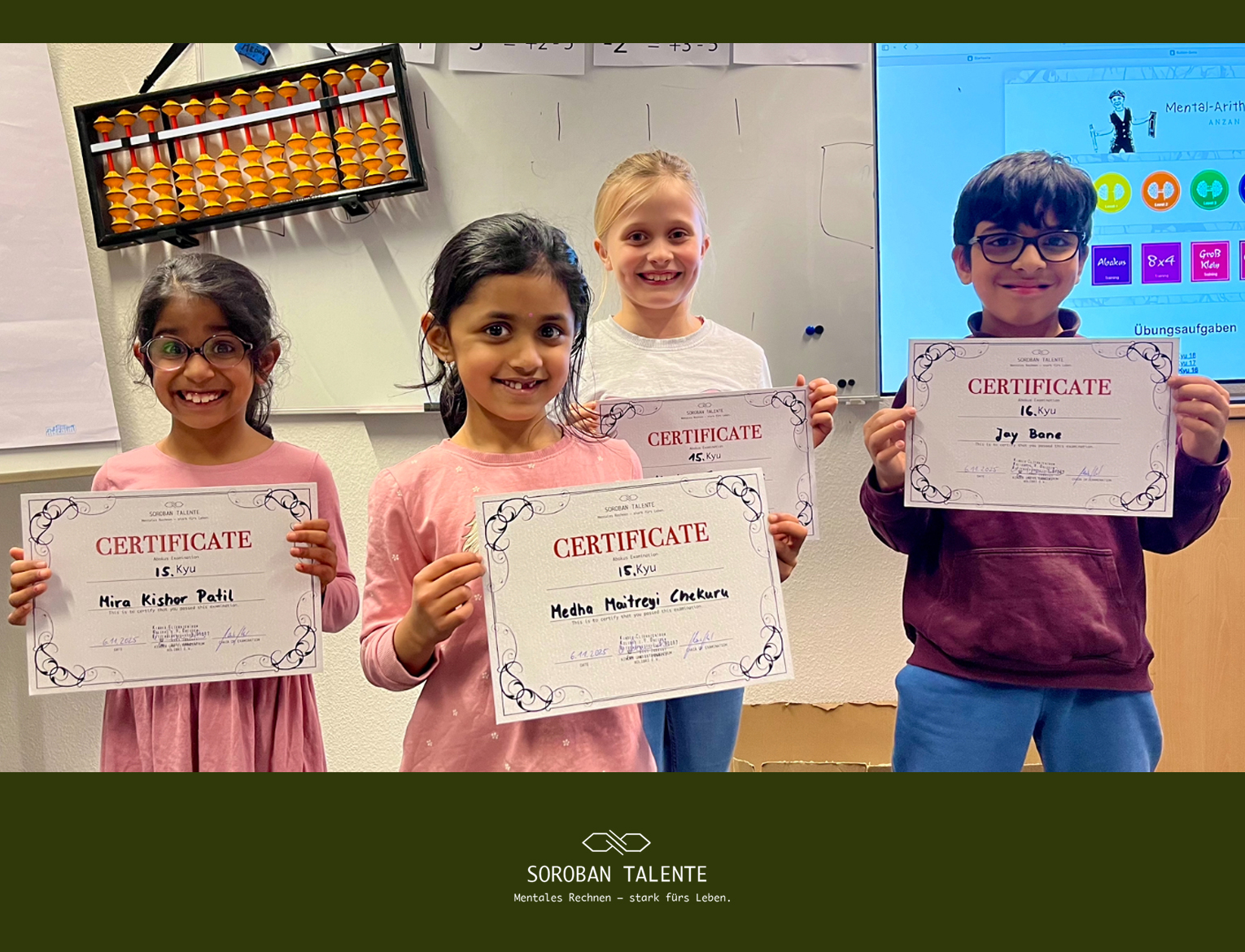
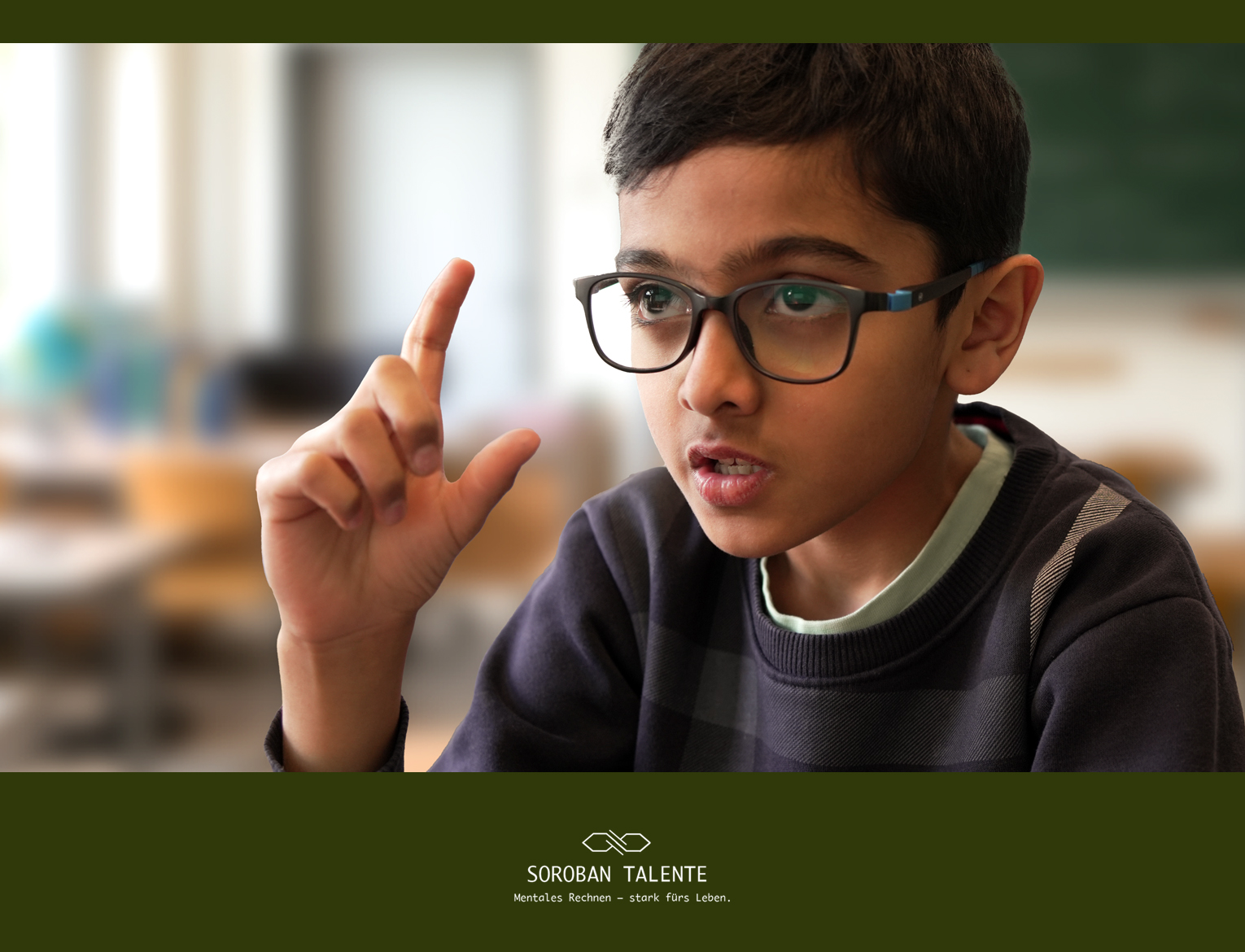
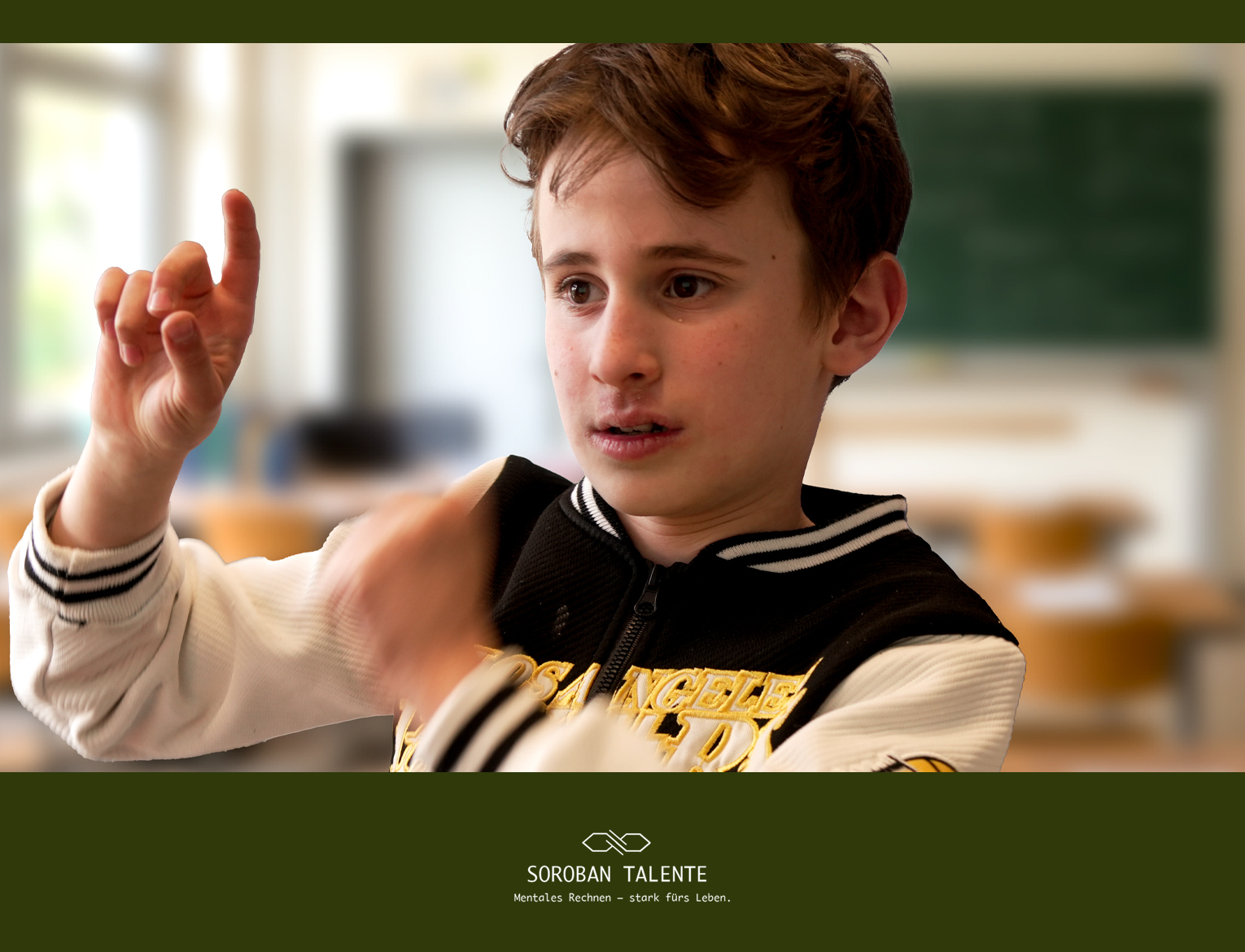
Insight 1
Video preview
Insight 2
Insight 3
Insight 4
Insight 5
Insight 6

Times, age & cost

Courses take place in small groups. Each session lasts 50 minutes.

Monday
16:00 – 16:50

6 – 9 years · weekly during term time

Tuesday
16:00 – 16:50

6 – 9 years · weekly during term time

Tuesday
17:00 – 17:50

9 – 14 years · weekly during term time

Location
Kinder- und Elternzentrum Kolibri e.V.

Ritzenbergstraße 3, 3rd floor · 01067 Dresden

Cost
€69 / month

Applies to all courses

Step by step –
at your own pace

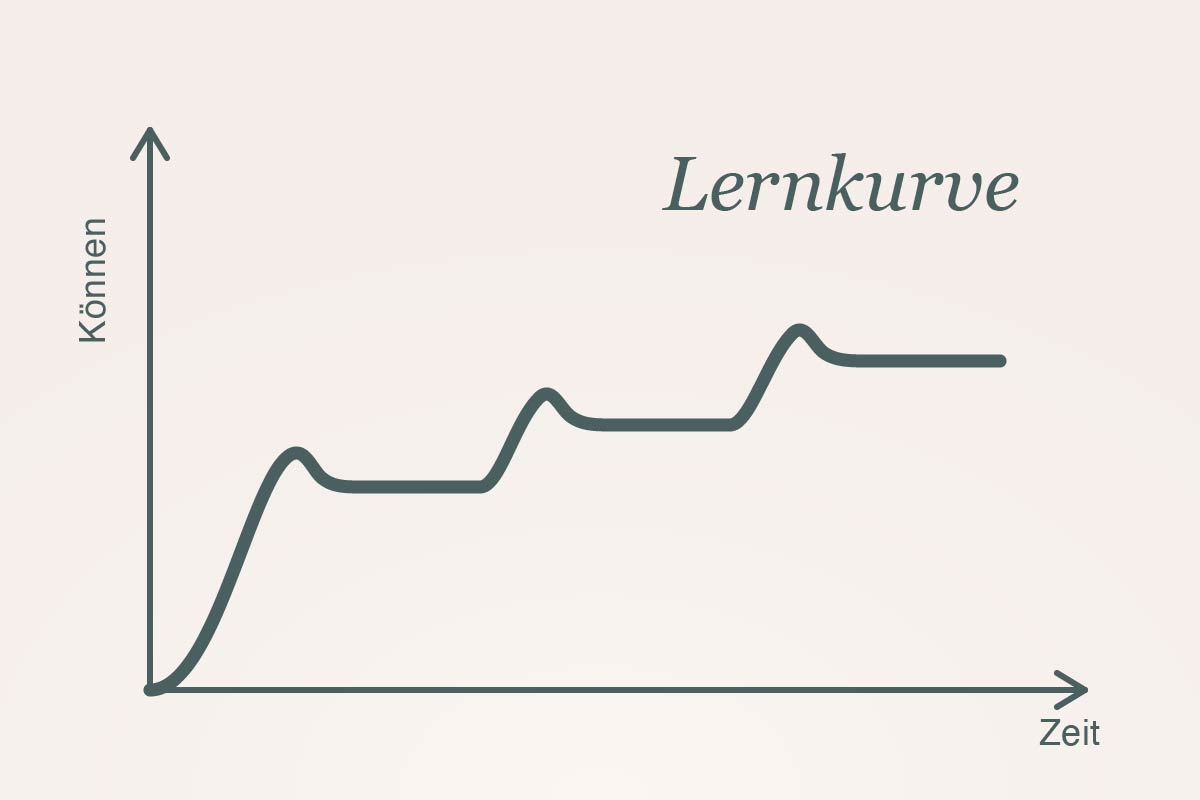
There's no race. The method builds on itself: those who understand the foundation naturally get faster.

01

Basic structure

The build and logic of the Soroban, the four basic operations – step by step, without time pressure.

02

Repetition and flow

Targeted exercises build automaticity. Movements become surer, thinking becomes faster.

03

Mental calculation

The abacus moves from the table into the mind. Those who reach this stage calculate with an inner image.

Course process

Trial lesson

In one hour you'll get to know how it works, see how the Soroban functions and can ask any questions. No obligation.

Request an appointment